sales@hu-steel.com
 English
 Español
Differences between ERW and SAW pipes:
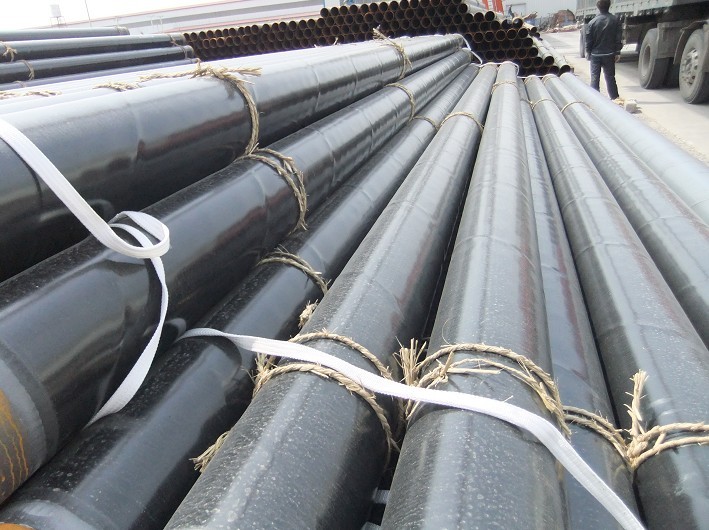
ERW (Electric Resistance Welding) is one of the main processes for producing straight seam steel pipes. It utilizes the skin effect and proximity effect of high-frequency current to rapidly heat the edges of the steel strip to a molten state, achieving solid-state pressure welding under the pressure of extrusion rollers. This process does not use welding wire or flux, and the weld composition is very similar to the base material.
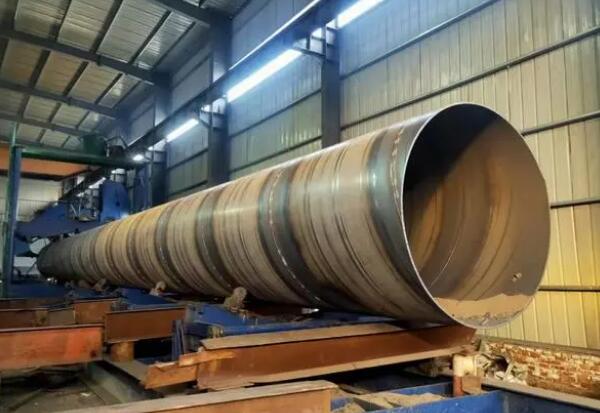
SAW (Submerged Arc Welding) is a welding process applicable to various weld types, including straight seam pipes (LSAW), spiral seam pipes (SSAW/SAWH), and circumferential seams. In the welded pipe industry, when compared with ERW, "SAW pipe" usually refers to spiral seam submerged arc welded pipes (SAWH/SSAW), while straight seam submerged arc welded pipes (LSAW) are commonly referred to simply as "straight seam submerged arc welded pipes."
|
Performance Indicators |
ERW (High-Frequency Resistance Welded Pipe) |
SAW (Spiral Submerged Arc Welded Pipe) |
|
Size Range |
Outer Diameter: 1/2″ – 24″ (21.3mm – 610mm) |
Outer Diameter: 16″ – 120″+ (406mm – 3000mm+) |
|
Weld Seam Morphology |
One longitudinal straight seam, internal burrs can be removed, weld reinforcement is close to the base material. |
One continuous spiral seam, inner and outer weld beads have standard allowable reinforcement, can be ground to flush before 3PE coating. |
|
Dimensional Accuracy |
Extremely high, small tolerances for outer diameter and wall thickness, good straightness. |
Diameter accuracy meets standards, and macroscopic roundness control is also excellent. |
|
Residual Stress |
Cold bending + online heat treatment results in low and controllable residual stress. |
Forming and welding stresses are more complex, but after stress relief processes such as mechanical diameter expansion, they fully meet application standards. |
|
Weld Coefficient |
1.0 (equivalent to the base material after 100% non-destructive testing). |
1.0 (equivalent to the base material on both sides after 100% non-destructive testing). |
4. Procurement Costs and Selection Recommendations
Small to Medium Diameter (≤ 24 inches): ERW is the most cost-effective choice.(Applicable scenarios: Oil and gas trunk lines, water diversion projects, large pipe piles)
Differences between SAW, LSAW, SSAW, and DSAW:
|
Abbreviation |
Full Name |
Brief Description |
|
SAW |
Submerged Arc Welding |
A welding process where the electric arc burns under a layer of flux. It has advantages such as stable welding quality, high productivity, no arc light, and less smoke. It is the common process basis for the following pipe types. |
| LSAW |
Longitudinal Submerged Arc Welding |
A type of steel pipe with a longitudinally straight weld seam, formed by welding steel plates after UOE or JCOE forming. |
| SSAW |
Spiral Submerged Arc Welding |
A type of steel pipe with a spiral weld seam, formed by continuously spirally coiling steel strips, also known as HSAW or SAWH. |
| DSAW |
Double Submerged Arc Welding |
Refers to a welding method where submerged arc welding is performed once on each side of the steel pipe. In the field of straight seam pipes, DSAW and LSAW are often used interchangeably. |
Q1: What is the essential difference between ERW and SAW?
A:
ERW (Electric Resistance Welding) utilizes the skin effect of high-frequency current to instantly melt the edges of the steel plate, achieving solid-state pressure welding under the action of extrusion rollers. It does not use filler wire, and the weld composition closely resembles the base material. SAW (Submerged Arc Welding) ignites an electric arc under a layer of granular flux, using welding wire and flux as filler and protective materials. The weld has a cast structure, deep penetration, and high strength.
Q2: Is SAW pipe always spiral welded pipe?
A:
Not necessarily. SAW only represents the "submerged arc welding" process, which in the welded pipe industry can be divided into:
LSAW Pipe (Straight Seam Submerged Arc Welded Pipe): Single-sheet steel plate forming, longitudinal weld, suitable for large-diameter, thick-walled, high-pressure pipelines;
SAWH/SSAW Pipe (Spiral Seam Submerged Arc Welded Pipe): Steel strip spirally rolled, spiral weld, capable of producing ultra-large diameter (over 3000mm) pipes.
Q3: Which has better weld quality, ERW or SAW pipe?
A:
SAW pipe typically uses double-sided submerged arc welding, with the weld fused from both the inside and outside, achieving a penetration depth of over 20mm. It has more filler metal and a higher weld height, forming a reinforcing rib effect. ERW pipes are single-extrusion welded, and wall thickness is limited by weld penetration. For pipes with wall thicknesses exceeding 20mm, SAW is the only feasible welding process.
Modern ERW pipe welds have properties approaching those of the base material; LSAW's double-sided welded structure offers superior reliability in thick-walled, high-pressure applications. The Heat-Affected Zone (HAZ) of the weld area is a key area for inspection.
Q4: What is the price difference between ERW and SAW pipes?
A: Price ranking (same specifications, same steel grade): ERW < Spiral SAW < LSAW.
Read more: ERW Pipe vs. LSAW Pipe
Related information
Copyright @2017 Hunan Standard Steel Co.,Ltd and Husteel Industry Group All Rights Reserved