sales@hu-steel.com
 English
 Español
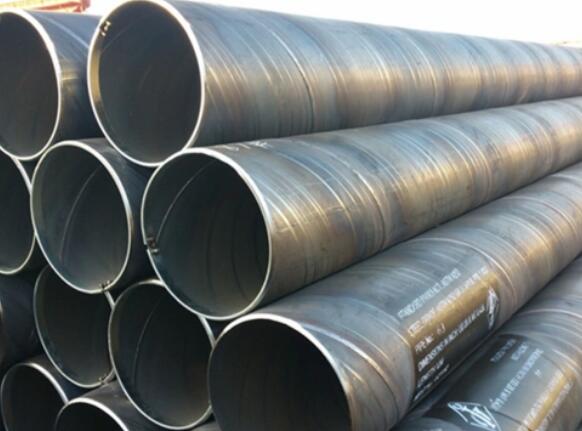
Choosing the right ASTM A252 steel pipe piles is crucial for project safety and cost. This guide provides a detailed comparison of the mechanical properties and applicable scenarios for Grade 2 and Grade 3 pipe piles, along with a complete dimensional specification reference, to help you make a quick selection decision.
ASTM A252/A252M is a standard specification for welded and seamless steel pipe piles, developed by the American Society for Testing and Materials (ASTM). Its full name is "Standard Specification for Welded and Seamless Steel Pipe Piles".
This standard applies to cylindrical steel pipe piles with nominal wall thicknesses. Its core applications are twofold:
1. As permanent load-bearing components: The steel pipe pile directly bears structural loads;
2. As the outer shell of cast-in-place concrete piles: The steel pipe acts as a formwork, with concrete poured inside to form the pile foundation.
| Grade | Minimum Yield Strength | Minimum Tensile Strength | Common Applications |
|---|---|---|---|
| Grade 1 |
30,000 psi (205 MPa) |
50,000 psi (345 MPa) |
Pile foundations with generally low load‑bearing requirements |
| Grade 2 |
35,000 psi (240 MPa) |
60,000 psi (414 MPa) |
Most commonly used, suitable for conventional building pile foundations |
| Grade 3 |
45,000 psi (310 MPa) |
66,000 psi (455 MPa) |
Pile foundations with high load‑bearing requirements |
Selection Tip: Grade 2 is the default choice for most building foundations. Grade 3 should be considered when design loads are exceptionally high, or when soil conditions are poor and require higher strength. Over-specifying can lead to unnecessary costs.
| Parameter | Details |
|---|---|
| Outer Diameter |
Commonly 8″ ~ 40″ (219mm ~ 1016mm); maximum up to 56″ (1422mm) (Tolerance: ±1% of specified OD) |
| Wall Thickness | Determined based on diameter and load‑bearing requirements; tolerance not exceeding 12.5% under nominal wall thickness |
| Length Options |
Single Random Length: 16‑25 ft (4.88‑7.62 m) Double Random Length: >25 ft, average ≥35 ft (10.67 m) Fixed Length: Available upon request |
| Manufacturing Types | Seamless, Welded; weld types can be straight seam, helical butt, or helical lap |
● Steel Pipe Types: Seamless steel pipes, welded steel pipes (including resistance welding, flash welding, and fusion welding).
● Weld Types: Straight seam, spiral butt joint, spiral lap joint.● Applications: Building pile foundations, bridge foundations, retaining walls, marine engineering pile foundations, protective casings, etc.
| Standard | Main Application | Yield Strength Range | Chemical Composition Requirements | Applicability |
|---|---|---|---|---|
| ASTM A252 | Steel Pipe Piles (Foundation Load‑Bearing) | 30‑45 ksi | No Requirements | Pile Foundation Engineering |
| ASTM A500 | Round/Square Tubes for Structural Use | 42‑46 ksi | Required | Building Structural Components |
| ASTM A53 | Pressure/Mechanical Piping | 35 ksi | Required | Fluid Transportation, General Structures |
| API 5L | Line Pipe | 35‑80 ksi | Required | Long-Distance Oil and Gas Transportation |
Note: ASTM A252 is not listed as a directly usable structural material by AISC 360 (American Steel Structure Design Code). If it is to be used in building structures, the design engineer assumes additional verification responsibility.
Standard Number: ASTM A252/A252M-19 (Current version; a new version will be released in 2026)
Outer Diameter: Commonly 8" ~ 40" (219mm ~ 1016mm), maximum up to 56" (1422mm) (Tolerance: ±1% from the specified outer diameter)
Wall Thickness: Determined based on diameter and load-bearing requirements (Tolerance: not exceeding 12.5% of the nominal wall thickness)
Length:
Single Random Length: 16-25 feet (4.88-7.62 meters)
Double Random Length: >25 feet, average ≥35 feet (10.67 meters)
Fixed Length: Customized upon request
Q5: Purchasing ASTM What quality documents are required for A252 piling pipe?
A: Quality Certificate (MTC, including mechanical properties and chemical composition)
Product Certificate
Non-destructive Testing Report (if required)
Dimensional Inspection Record
Raw Material Quality Certificate
Q6: How to protect piling pipe from corrosion?
A: Selection depends on the service environment:
Freshwater/Land Environment: Coating protection (epoxy, polyurethane)
Seawater/Marine Environment: Coating + cathodic protection combined
Concrete-filled piles: Concrete provides an alkaline protective environment
ASTM A252 piling pipe is a core material for deep foundation engineering. By rationally selecting the strength grade, pile type (friction pile/end-bearing pile, open/closed), and construction technology, it can meet the needs of various projects from general buildings to large-scale infrastructure. During construction, key issues such as pile displacement, pile top breakage, and penetration control should be closely monitored to ensure project quality.
Selecting the right ASTM A252 pipe pile grade and size can be complex. Our technical team can help you evaluate your project requirements and recommend the most cost-effective solution.
▶ Email: sales@hu-steel.com
HSCO Steel – Your Partner for Quality Steel Pipe Pile Solutions
Related Resources:
Related information
Copyright @2017 Hunan Standard Steel Co.,Ltd and Husteel Industry Group All Rights Reserved