What is the Applicable Temperature Range of Seamless Pipes?
The applicable temperature range of seamless pipes & tubes (SMLS) is determined by the material grade, manufacturing process, and heat treatment state. It is a core indicator for the safe operation, service life, and suitability for operating conditions of pipelines. Different materials of seamless pipes vary significantly in low-temperature brittleness resistance and high-temperature creep resistance. The industry has clearly defined temperature application ranges based on material grades, covering various industrial scenarios such as low temperature, normal temperature, medium-high temperature, and ultra-high temperature. Specific temperature ranges and application specifications are as follows:
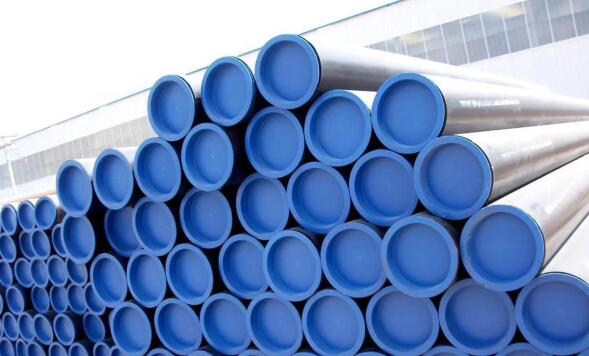
● Applicable Temperature Range of Ordinary Carbon Steel Seamless Pipes:
Ordinary carbon steel is the most commonly used material for seamless pipes, represented by
ASTM A106 Gr.B and
ASTM A53 Gr.B. It offers high cost-effectiveness and is suitable for most conventional operating conditions.
1. ASTM A106 Gr.B Carbon Steel Seamless Pipe
Applicable Temperature: -29℃ ~ 425℃ (short-term allowable up to 450℃)
Performance Characteristics: An American standard for high-temperature
seamless carbon steel pipe, possessing good high-temperature strength and weldability; the lower temperature limit of -29℃ is the critical point for the brittle transition of ordinary carbon steel, below which low-temperature carbon steel must be selected.
Typical Applications: Petrochemical process piping, power plant auxiliary piping, high-temperature fluid transportation systems.
2. ASTM A53 Gr.B Carbon Steel Seamless Pipe
Applicable Temperature: -29℃ ~ 400℃
Performance Characteristics: An American standard for general-purpose carbon steel pipe, accommodating both seamless and welded types; strength comparable to A106 Gr.B, but with a slightly lower upper temperature limit.
Typical Applications: General fluid transportation, compressed air systems, water treatment piping, structural support.
3. ASTM A106 Gr.C Carbon Steel Seamless Pipe
Applicable Temperature: -29℃ ~ 425℃
Performance Characteristics: Slightly higher carbon content than Gr.B, resulting in higher strength and hardness, suitable for higher pressure conditions.
Typical Applications: High-pressure pipelines, oil and gas gathering and transmission pipelines, boiler feedwater pipelines.
● Low Alloy Steel Seamless Tube Applicable Temperature Range:
Low alloy seamless tubes are made by adding a small amount of alloying elements to carbon steel, improving low-temperature toughness and medium-temperature strength.
1) ASTM A333 Gr.6 Low-Temperature Carbon Steel Seamless Tube
Applicable Temperature: -45℃ ~ 425℃ (Low-temperature testing requires verification)
Performance Characteristics: Carbon steel specifically designed for low-temperature conditions, verified by impact testing to withstand extreme cold environments down to -45℃ without brittle fracture; upper temperature limit is comparable to ordinary carbon steel.
Typical Applications: Outdoor pipelines in northern regions, ethylene plants, LNG pretreatment, cryogenic pressure vessels.
2) API 5L Gr.B Seamless Pipeline Steel
Applicable Temperature: -20℃ ~ 400℃
Performance Characteristics: Specifically designed for oil and gas transmission pipelines, possessing both good strength and weldability.
Typical Applications: Long-distance oil and gas pipelines, urban gas pipeline networks.
● Chromium-Molybdenum Alloy Steel Seamless Pipe Applicable Temperature Range:
Chromium-molybdenum alloy seamless pipe is specifically designed for high-temperature and high-pressure conditions and is the standard pipe material for boilers and steam systems.
1) ASTM A335 P11/P22 Alloy Seamless Pipe
Applicable Temperature: Ambient temperature ~ 575℃ (P11) / Ambient temperature ~ 600℃ (P22)
Performance Characteristics: Contains alloying elements such as chromium (1.25%-2.25%) and molybdenum (0.5%-1.0%), possessing excellent high-temperature resistance, oxidation resistance, and creep resistance, enabling long-term stable operation under high temperature and high pressure.
Typical Applications: Power plant boiler steam pipelines, petroleum refining heating furnace tubes, high-temperature heat exchange equipment.
2) ASTM A335 P91 Alloy Seamless Pipe
Applicable Temperature: Room temperature ~ 650℃
Performance Characteristics: 9% chromium-1% molybdenum alloy steel, superior high-temperature strength and creep resistance compared to P22, wall thickness can be reduced, commonly used in ultra-supercritical units.
Typical Applications: Main steam pipes of ultra-supercritical boilers, high-temperature headers.
● Austenitic Stainless Steel Seamless Tube Applicable Temperature Range:
Austenitic
stainless steel seamless tubes combine high and low temperature resistance with corrosion resistance, offering the widest applicable temperature range, and do not have a ductile-brittle transition problem.
1) ASTM A312 TP304/304L Stainless Steel Seamless Tube
Applicable Temperature: -196℃ ~ 750℃ (continuous use) / 800℃ (short-term)
Performance Characteristics: Suitable for cryogenic media such as liquid nitrogen at low temperatures, excellent oxidation resistance at high temperatures, and good corrosion resistance; the 304L low-carbon version is more suitable for scenarios requiring no post-weld heat treatment.
Typical Applications: Food and pharmaceutical equipment, chemical equipment, cryogenic storage tanks, heat exchange pipelines.
2) ASTM A312 TP316/316L Stainless Steel Seamless Pipe
Applicable Temperature: -196℃ ~ 850℃ (continuous use) / 870℃ (short-term)
Performance Characteristics: Contains molybdenum (2%-3%), superior corrosion resistance and high-temperature resistance compared to 304, with stronger resistance to pitting and crevice corrosion.
Typical Applications: High-end chemical industry, shipbuilding, nuclear power plant auxiliary pipelines, seawater contact equipment.
3) ASTM A312 TP321/347 Stainless Steel Seamless Pipe
Applicable Temperature: -196℃ ~ 900℃
Performance Characteristics: Contains titanium (321) or niobium (347) stabilizing elements, excellent resistance to intergranular corrosion, and better high-temperature strength.
Typical Applications: High-temperature chemical pipelines, nitric acid plants, aero-engine components.
Key Precautions for Temperature Use:
1. Prolonged use beyond the upper temperature limit is strictly prohibited, as this can lead to pipe deformation, cracking, and pressure failure, posing safety hazards.
2. In low-temperature environments (below -29℃), low-temperature toughness materials must be selected. Ordinary carbon steel is prohibited as a substitute to prevent brittle fracture.
3. In high-temperature and high-pressure conditions, dedicated
alloy boiler tubes must be used. Ordinary carbon steel and low-alloy steel tubes are strictly prohibited from use in high-temperature steam and boiler systems.
4. In scenarios with frequent temperature fluctuations, heat-treated seamless tubes must be selected, and pipeline flexibility should be rationally designed to reduce internal stress and improve operational stability.
Conclusion:
Seamless pipes are suitable for temperatures ranging from -196℃ to 850℃. Engineering selection must strictly match the medium temperature and ambient temperature, comprehensively considering material, standards, and testing requirements to ensure the safe, stable, and long-term operation of the pipeline system.
Read more: Low, Medium and High Pressure Boiler Tube or Schedule 80 Carbon Steel Pipe
 sales@hu-steel.com
 English
 Español