EN 10210 CE Certification for Hot-Formed Structural Hollow Sections

Keywords: EN 10210 CE Certification, CE Marking, CE Certification for Hot-Formed Structural Hollow Sections

EN 10210 CE certification for hot-formed structural hollow sections refers to the certification of hot-formed hollow structural profiles in accordance with the EU Construction Products Regulation 305/2011/EU and the harmonized standard EN 10210 series. The following is a detailed explanation of EN 10210 CE certification for hot-formed structural profiles:


Certification Background and Purpose:

Hot-formed structural hollow sections are widely used in building steel structures, offshore platforms, engineering machinery, and other metal structures. To ensure the safety and performance of these products, products exported to the European Economic Area must comply with the requirements of the EU Construction Products Regulation (CPR, (EU) No 305/2011). This regulation stipulates that manufacturers must demonstrate that their products comply with harmonized standards through a specified conformity assessment procedure, using a Declaration of Performance (DoP) and the CE marking. For hot-formed structural hollow sections, the core harmonized standard is EN 10210.
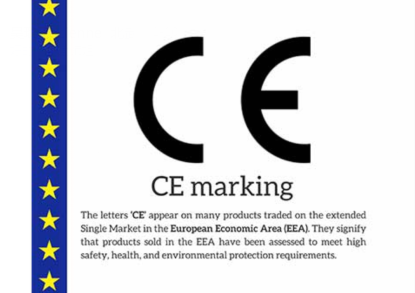

 EN 10210 CE Marking


EN 10210 Standard: 

This standard, officially titled "Technical Conditions for Delivery of Hot-Worked Non-Alloy and Fine-Grained Structural Steel Hollow Profiles," is mainly divided into two parts:


EN 10210-1: Applicable to welded profiles. The typical manufacturing process involves cold bending steel plates or strips into tubular shapes, followed by overall heat treatment (usually normalizing), and finally finishing and sizing. It can be summarized as a 'cold forming and welding + overall heat treatment' process.
EN 10210-2: Applicable to seamless profiles. The manufacturing process typically involves hot piercing or hot extrusion followed by heat treatment. The core of this standard lies in specifying uniform technical requirements for the hot-working (mainly referring to overall heat treatment) state of finished profiles.

Scope of Application: 

This certification applies to the delivery technical conditions and conformity assessment of hot-formed hollow structural profiles for load-bearing structures such as buildings and civil engineering projects.


Typical Products:
EN Standard 10210 applies to hot-formed hollow profiles made from the following two main categories of steel:

1. Non-alloy structural steel (the most common component)
This portion of steel is typically identified by its minimum yield strength and impact toughness quality grade (S235J2H, S275J2H, S355J2H). For example, grades with minimum yield strengths of 235 MPa, 275 MPa, and 355 MPa, meeting specific impact energy requirements (J2).

2. Weldable fine-grained structural steel, primarily including:
Normalized or normalized rolled steel: such as S275N/NL, S355N/NL, S420N/NL, S460N/NL.
Thermomechanically rolled steel: such as S275M/ML, S355M/ML, S420M/ML, S460M/ML.
Product shapes include round, rectangular, square, and oval tubes.

Product Requirements:

EN 10210 standard sets forth specific requirements and assessment methods for the dimensions, chemical composition, carbon equivalent, elongation, tensile strength, yield strength, impact energy, weldability, suitability for high-temperature properties, surface condition, and hazardous substance content of thermoformed structural hollow profiles. These requirements aim to ensure product quality and safety, meeting the load-bearing requirements of building structures.

Conformity Assessment: 

To demonstrate product compliance with EN 10210 requirements, companies need to complete a conformity assessment in the following two steps:


Initial Type Test (ITT): Inspect the product's elongation, tensile strength, yield strength, impact energy, weldability, and other characteristics according to the standard requirements.

Factory Production Control (FPC): Control key aspects such as personnel requirements, equipment requirements, design process, raw material verification, process control, labeling and traceability, corrective actions for nonconforming products, handling and storage, and document control according to the standard requirements. 


Use of the CE Marking: 

To legally use the CE marking, companies must apply to an EU notified body and complete the following steps according to the Construction Products Regulation (CPR) System 2+:


1) Initial Type Test (ITT) under surveillance;
2) Accept and pass the initial audit of the Factory Production Control (FPC) system. Upon successful audit, the notified body issues an FPC Certificate of Conformity. At this point, the company can affix the CE mark to its products and issue a Declaration of Performance (DoP).

3) After issuing the FPC certificate, the notified body must conduct periodic surveillance audits (usually annually) to ensure the continued validity of the certificate.


Read more: EN 10219 Cold-Formed Welded Structural Hollow Sections

Recruiting Agents - Check Policies Here

Copyright @2017 Hunan Standard Steel Co.,Ltd and Husteel Industry Group All Rights Reserved

linkin  youtube

We use cookies to offer a better browsing experience, analyze site traffic, and personalize content. By using this site, you agree to our use of cookies.

Accept
Decline