What is ASTM A106 Schedule 40 Pipe?
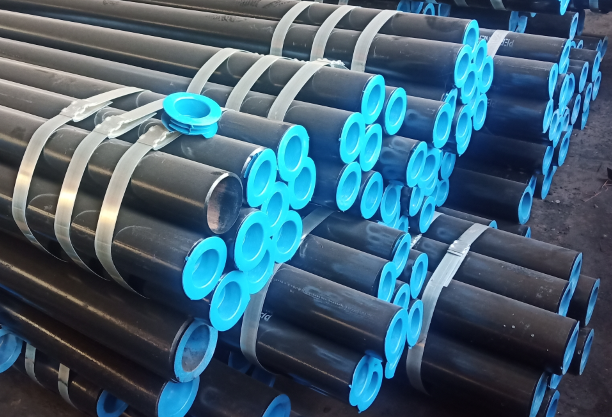
ASTM A106 Schedule 40 steel pipe is a high-quality
carbon steel pipe designed specifically for high-temperature and high-pressure applications and manufactured using a seamless process. Its standard wall thickness (SCH 40) achieves an optimized balance between pressure resistance and material cost.
In high-temperature and high-pressure systems where the medium is not significantly corrosive (such as power plant steam and high-temperature heat transfer oil), ASTM A106 GR.B Sch 40 seamless pipe is a safe and economical mainstream choice due to its excellent high-temperature strength and reliability. If the medium is corrosive, corrosion-resistant materials such as stainless steel or alloy steel must be selected.
Standard:
The full name of the ASTM A106 standard is "Specification for Seamless Carbon Steel Tubes for High Temperature Applications," which is designed specifically for high-temperature and high-pressure applications. "Schedule 40" (often abbreviated as SCH 40) represents the standard wall thickness, which is the most commonly used and economical wall thickness series.
Material and Grade:
ASTM A106 SCH 40 steel pipe is made of carbon steel, with three grades: A, B, and C. The most common is A106 Grade B (yield strength ≥ 240 MPa).
Manufacturing Process:
ASTM A106 SCH 40 steel pipe is limited to
seamless pipe, without longitudinal welds, ensuring higher uniformity and reliability.
Size Specifications:
ASTM A106 SCH 40 carbon steel pipe dimensions follow ASME B36.10 standards, with nominal sizes covering 1/8″ to 24″ and above. For the same size, with a fixed outer diameter, Sch 40 corresponds to a specific wall thickness. Click here to view the SCH 40 carbon steel pipe size table.
Core Advantages:
ASTM A106 SCH 40 CS seamless pipe has excellent high-temperature resistance. Its seamless structure eliminates the potential failure risk of welds. As the standard wall thickness pipe under this standard, SCH 40 is the most cost-effective choice to meet most high-temperature and high-pressure requirements.
Pipe End Types:
ASTM A106 Schedule 40 seamless steel pipes primarily come in three end types: flat end, threaded end, and grooved end. The choice depends on the connection method, design pressure, installation conditions, and future maintenance requirements of the piping system.
Flat ends, due to their welded connection, offer advantages such as high strength, strong sealing, and permanent connection. They are commonly used in critical process main lines under high temperature and pressure, and in pipelines requiring burial or insulation. Grooved flat ends are the most common and standard end type for A106 Schedule 40 steel pipes.
Threaded ends are detachable and flexible in installation, commonly used for low-pressure branch pipes such as small-diameter instrument connections and equipment interfaces.
While the pressure-bearing capacity of grooved ends is limited by clamps and sealing rings, their advantages—fastest installation speed, easy adjustment, and convenient disassembly—make them suitable for low-pressure water systems, fire protection systems, and other applications requiring rapid installation and maintenance.
Grooved End Applications: Grooved ends are sometimes used for large-diameter A106 pipes in high-temperature hot water systems of large commercial buildings or industrial systems requiring rapid installation. However, it is necessary to confirm that the temperature and pressure ratings of the clamps and seals match the design conditions of the A106 steel pipe.
Typical Applications of ASTM A106 SCH 40 Pipes:
Due to its excellent high-temperature stability, it is mainly used in critical industrial systems where thermal stress exists:
1. Power Industry: Superheated steam pipes, main feedwater pipes, and reheater piping in power plant boilers.
2. Petrochemical Industry: High-temperature process piping in chemical plants and refineries, and reactor inlet and outlet pipelines.
3. Heating Systems: High-temperature hot oil transmission pipelines, and steam transmission pipelines in industrial boilers.
4. Other High-Temperature Systems: Piping in heat exchangers and heating furnaces.
Why Not Choose ASTM A53 SCH 40 Seamless Pipes?
ASTM A106 seamless pipes have high-temperature suitability in high-temperature environments.
At room temperature or low to medium temperatures, ASTM A106 and
ASTM A53 SCH 40 seamless pipes have similar mechanical properties, with A53 being more cost-effective. However, in high-temperature conditions (>350℃), the more stringent chemical composition of the A106 standard ensures its high-temperature strength and service life, while A53 may fail prematurely due to material degradation.
Key Points for Procurement and Inquiry:
When you need to purchase or inquire about prices, you should provide the most complete information, such as:
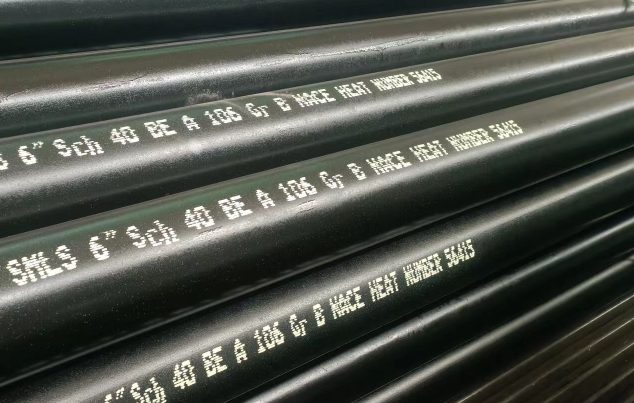
ASTM A106 Gr.B Sch 40 Seamless Pipe, BE (Beveled End) for welding
ASTM A106 Gr.B Sch 40 Seamless Pipe, TE (Threaded End)
Conclusion:
In high-temperature thermal pipelines in industries such as power and petrochemicals, ASTM A106 Schedule 40 seamless pipe is the standard configuration that meets specifications and ensures the long-term safe operation of the system. Choosing it means paying the necessary cost for safety and durability at high temperatures.
For high-temperature and high-pressure pipes such as ASTM A106 Schedule 40, the preferred and default end type is a beveled flat end for welding to ensure system integrity. Threaded and grooved ends are supplementary options under specific conditions, and their applicability should be carefully evaluated; they are generally not used in core high-temperature and high-pressure processes.
Read more: SCH 40 vs SCH 40S Pipes or Schedule 80 Carbon Steel Pipe
 sales@hu-steel.com
 English
 Español