sales@hu-steel.com
 English
 Español
This page provides a quick summary of the key differences between ERW and SMLS (seamless) steel pipes.
● For a complete cost-benefit analysis and step-by-step selection framework, please see our main guide.
● For an in-depth technical parameter comparison (tolerances, material properties, tests), please see our technical deep-dive.
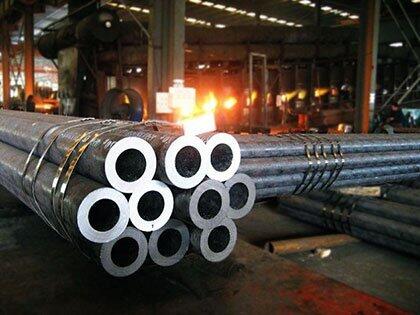
SMLS (seamless) pipe and ERW (electric resistance welded) pipe are two main types of steel pipes in the industry. They have significant differences in manufacturing process, performance, appearance, cost, and application scenarios. The following is a brief comparison:
|
Performance |
SMLS steel pipe |
ERW steel pipe |
|
Strength |
High (no weld weak zone) |
Medium (slightly lower strength in weld zone) |
|
Pressure resistance |
Excellent (suitable for high pressure) |
Good (medium and low pressure occasions) |
|
Corrosion resistance |
Uniform (no weld corrosion risk) |
Welds are prone to rust (anti-corrosion treatment required) |
|
Dimensional accuracy |
High (cold drawn tube accuracy ±0.1mm) |
General (hot rolled coil limit) |
|
Low temperature toughness |
Good (no welding heat affected zone) |
Weld zone may be brittle (process control required) |
| Cost |
Higher |
20-50% lower |
For detailed parameters (surface quality, tolerances, impact test, etc.), explore the full technical comparison.
ERW pipe: Water/gas pipelines, building scaffolding, structural support, general low-pressure fluid pipes.
Explore Our Products:
ERW Steel Pipe – View specifications and request a quote.
Seamless Steel Pipe – View specifications and request a quote.
1: Can ERW steel pipe replace SMLS steel pipe?
A: It depends on the application.High pressure/dynamic load (e.g., oil cracking pipes): No.
➡️ For a full decision framework, see the main selection guide.ERW welded pipe: up to Φ1420mm (such as spiral welded pipe).
Further Reading:
● Seamless Pipe vs Welded Pipe Price
Related information
Copyright @2017 Hunan Standard Steel Co.,Ltd and Husteel Industry Group All Rights Reserved