sales@hu-steel.com
 English
 Español
How to correctly measure square tube size?
A) Measurement method
There are three methods for measuring the dimensions of square tubes: measuring the outer side length, wall thickness, and length.1. Measuring the outer side length (a and b)
Clean any burrs, paint, or rust from the ends of the square tube, ensuring contact with the metal body. Securely clamp the measuring jaws of a vernier caliper onto opposite sides of the outer wall of the square tube. Ensure the caliper is perpendicular to the tube wall, not tilted. Gently tighten the caliper until it is in close contact with the tube wall, but not excessively, and read the value.
Key points:
Multiple measurements: Measure at least twice at the same cross-section of the tube, rotating 90 degrees, to confirm whether it is a square tube (a=b) or a rectangular tube (a≠b), and to check if the cross-section has been deformed due to transportation or processing.
Measurement location: Measure at least 100mm from the end of the tube to avoid errors caused by irregular ends.
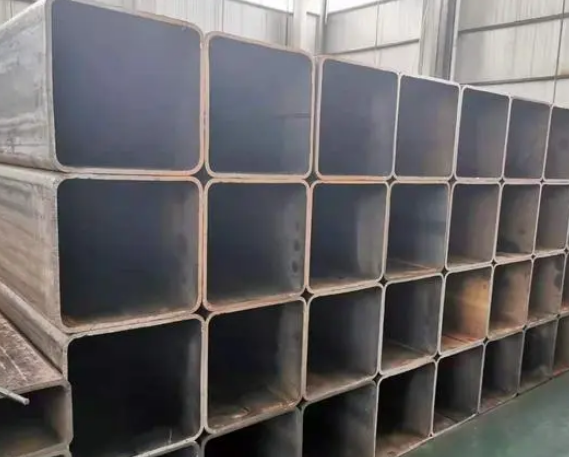
Wall thickness measurement is usually measured using a thickness gauge. The thickness gauge needle is placed on both sides of the square tube to measure the thickness, usually in millimeters or inches.
3. Measuring the length (L)
Method: Use a steel tape measure to measure the longest distance between the two ends of the square tube.
B) Standard size
The standard dimensions of a square tube are usually called specifications, which represent the outer side length, wall thickness, and length. Square tube specifications are usually expressed as "side length (a) × side length (b) × wall thickness × length", for example, 40 × 40 × 2.5 mm × 6 m.Another method is to use a protractor to take measurements. First, you need to place the protractor at the end of the square tube, turn the pointer to a position tangent to the square tube, and then read the scale of the protractor to get the diameter of the square tube. This method can be more accurate when measuring irregularly shaped square tubes, but care needs to be taken to ensure the stability and accuracy of the instrument.
3. Use a steel tape measure
A steel tape measure is a measuring tool made of a flexible thin steel strip. The tape surface is printed with graduations and is housed in a circular casing, automatically retracting via an internal spring mechanism. It is the most commonly used and basic length measuring tool in construction, decoration, engineering, manufacturing, and home DIY.
D) Common Misconceptions:
Misconception 1: Confusing Outer Diameter and Inner Diameter
All structural design and procurement are based on the outer side length. Never measure only the inner diameter, otherwise it will lead to selecting a tube that is too small.
Misconception 2: Indiscriminate Measurement Points
Avoid measuring at deformed ends, areas with weld bulges, or severe corrosion. Select sections of the tube that are straight and in good condition.
Note 1: The Existence of Tolerances
There is an allowable deviation (tolerance) between the actual size and the nominal size of square and rectangular tubes. For example, a nominal side length of 50mm, but an actual measured length of 49.8mm or 50.5mm, may be within the tolerance range allowed by national standards. If high precision is required, the tolerance grade must be specified during procurement.
Note 2: "Negative Tolerance" vs. "Sufficient Thickness"
Tubes with "negative tolerance" (actual thickness lower than the nominal value) and "sufficient thickness" exist in the market. Accurate measurement of the wall thickness can determine which type it is, which is crucial for cost accounting and structural safety.
E) Precautions
When measuring the size of square tubes, you need to pay attention to the following points:In short, correctly measuring the size of square tubes is the prerequisite for using square tubes. Only by selecting square tubes with appropriate specifications and good quality can the effectiveness and lifespan of the square tubes be improved during use.
ASTM A500 — Carbon steel cold-formed round and special-shaped cross-section welded square tubes and seamless square tubes for structural use
Related information
Copyright @2017 Hunan Standard Steel Co.,Ltd and Husteel Industry Group All Rights Reserved