sales@hu-steel.com
 English
 Español
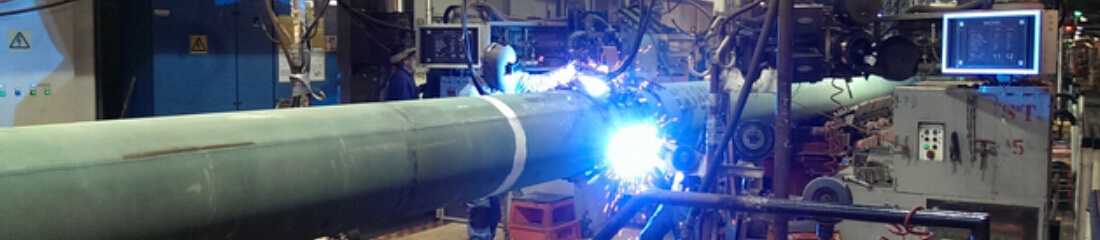
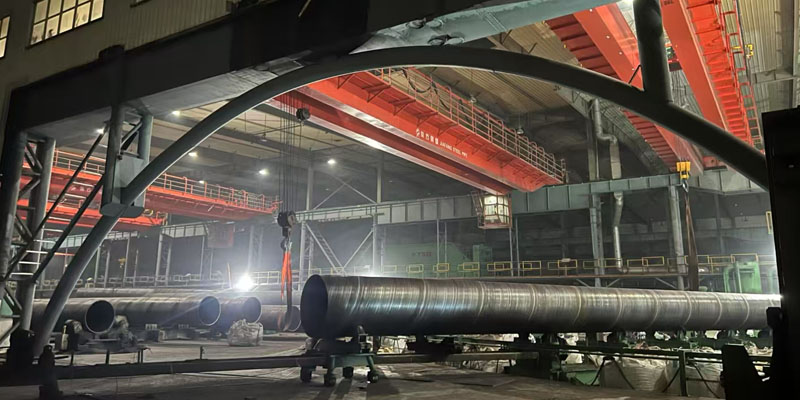
SSAW steel pipes are made from hot-rolled coils, formed into a spiral shape at room temperature, and then welded using an automatic double-sided submerged arc welding process.
Hunan Standard Steel Co., Ltd. (HSCO) has 12 modern SSAW steel pipe production lines, capable of producing a full range of products with outer diameters from 219mm to 3620mm, wall thicknesses from 5.0mm to 25.4mm, and steel grades from L245 to X80 (Grade B to X80).
The production lines are equipped with two specialized production lines: one for producing spiral submerged arc welded steel pipes (SSAW) and the other for producing straight seam submerged arc welded steel pipes (LSAW), meeting the diverse needs of different projects for steel pipe types.
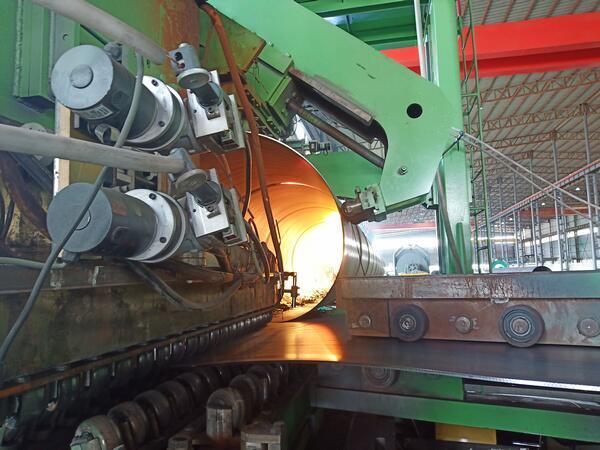
The production process of SSAW steel pipes is as follows:
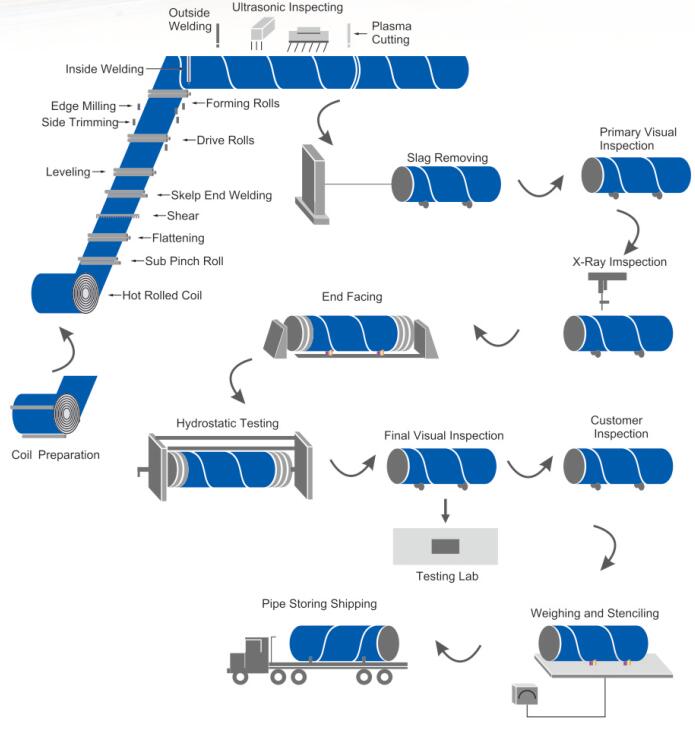
1. Coil Inspection: Steel coils enter the production line and undergo full-board ultrasonic inspection before processing.
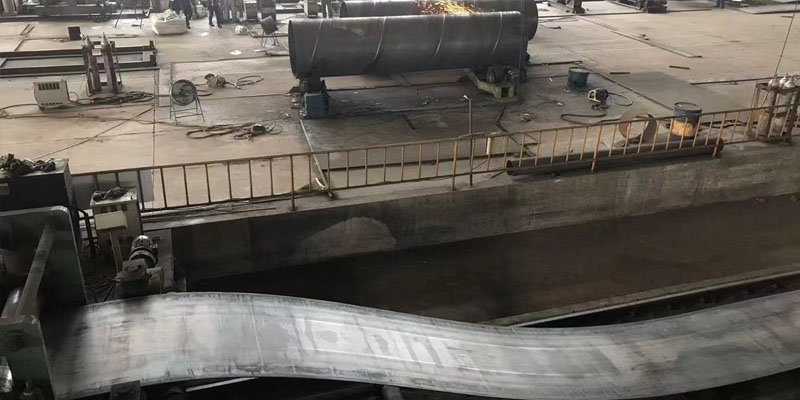
2. Leveling & Milling: The steel coil passes through a leveling machine to eliminate original curl, and then both edges are milled to achieve the required plate width and parallel groove shape.
3. Forming: The strip is gradually formed into a spiral tube blank through external or internal control roll forming.
4. Welding: Advanced double-sided submerged arc welding (DSAW) is used for both inner and outer welds, ensuring full penetration and stable weld quality.
5. Visual Inspection: Professional technicians check basic parameters and surface quality.
6. Ultrasonic Testing (UT): 100% ultrasonic inspection is performed on both inner and outer base metal and weld seams.
7. X-ray Detection: Internal and external welds undergo 100% X-ray television inspection, with an image processing system ensuring detection sensitivity.
8. Hydrostatic Pressure Test: Each steel pipe is tested by a hydrostatic testing machine to ensure it meets the standard pressure requirements.
9. Chamfering: Pipe ends are machined to meet the required beveling dimensions.
10. Final Inspection: X-ray and ultrasonic testing, as well as magnetic particle inspection, are conducted on pipe ends to check for welding defects.
11. Oiling & Marking: Qualified pipes are oiled for corrosion protection and marked according to customer requirements.
Copyright @2017 Hunan Standard Steel Co.,Ltd and Husteel Industry Group All Rights Reserved