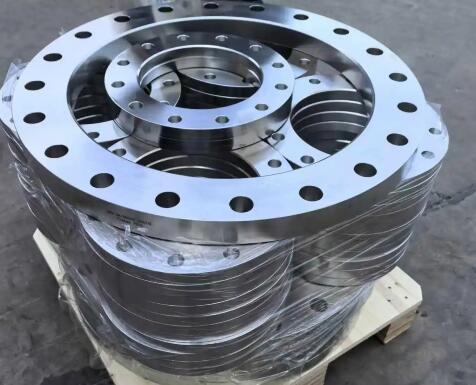
Carbon steel flanges are a common component in pipe connections. They are primarily made of carbon steel and manufactured through forging or casting processes. Carbon steel flanges are widely used in industrial piping systems, exhibiting both advantages and limitations. The following is a detailed analysis of their advantages and disadvantages.
Advantages of Carbon Steel Flanges:
The advantages of carbon steel flanges are mainly reflected in the following aspects:
1. Good Mechanical Properties
Carbon steel flanges possess high strength and hardness, capable of withstanding significant pressure and loads. In general industrial piping applications, carbon steel flanges can meet the mechanical requirements under most operating conditions, ensuring the stability and safety of the connection. Their tensile strength and compressive strength are good, making them suitable for medium- to high-pressure piping systems.
2. Relatively Low Cost
Carbon steel material itself is relatively economical, with mature production processes and controllable processing costs. Compared to flanges made of other materials, carbon steel flanges require relatively less investment in procurement and installation, making them suitable for projects with limited budgets or large-scale applications. This makes carbon steel flanges a cost-effective choice.
3. Mature Standards and Good Interchangeability
Carbon steel flanges have a globally unified and mature standard system, including American Standards (
ASME B16.5, ASME B16.47), German Standards (DIN), Japanese Standards (JIS), and Chinese Standards (GB/T 9112-9124). This makes carbon steel flanges universally interchangeable worldwide, facilitating procurement, installation, and maintenance.
4. Good Machining Performance
Carbon steel is easy to machine, such as turning, drilling, and welding. Carbon steel flanges can be processed into different specifications and shapes according to actual needs, adapting to various pipeline connection requirements. Welding performance is also relatively good, facilitating on-site installation and maintenance.
5. High Sealing Reliability
Carbon steel flanges, when used with appropriate gaskets (such as spiral wound gaskets or graphite gaskets) and fasteners, can achieve reliable sealing. Under conditions of fluctuating temperature and pressure, their sealing performance is superior to some plastic or composite material flanges.
6. High Repairability
If the sealing surface of a carbon steel flange is scratched or slightly corroded during use, it can be repaired on-site by machining without the need for complete replacement. This feature significantly reduces downtime losses for enterprises with continuous production (such as chemical plants and oil refineries).
7. Wide Range of Applications
Carbon steel flanges can be used for conveying various media, including water, steam, oil, and some non-corrosive gases. In general industrial environments, such as HVAC systems, general water supply pipelines, and low-pressure chemical pipelines, carbon steel flanges perform well.
Disadvantages of Carbon Steel Flanges:
However, carbon steel flanges also have some significant disadvantages:
1. Poor Corrosion Resistance
Carbon steel materials are prone to oxidation and rust in humid or corrosive environments, affecting their service life. When in contact with acidic, alkaline, or saline media, carbon steel flanges require additional anti-corrosion treatments, such as galvanizing, painting, or the use of protective coatings, which increases maintenance costs and complexity.
The applicability to different environments is as follows:
Dry indoor environments: Applicable; ordinary anti-rust paint is sufficient.
Damp outdoor or coastal environments: Use with caution; enhanced coating (epoxy zinc-rich, hot-dip galvanized) or upgraded materials are recommended.
Buried pipelines: Use with caution; 3PE coating or cathodic protection is mandatory.
Acidic, alkaline, or chemical media environments: Not suitable; stainless steel or alloy flanges should be selected.
2. Limited High-Temperature Performance
Carbon steel flanges may experience strength reduction or creep at higher temperatures. Prolonged use at high temperatures may cause oxidation or deformation, affecting sealing performance and connection reliability.
High-Temperature Applicable Limits for Different Carbon Steel Materials:
●
A105 (American Standard Forged Steel): Recommended operating temperature upper limit approximately 425℃
●Q235B (Chinese Standard): Recommended operating temperature upper limit approximately 350℃
●16Mn / A350 LF2: Recommended operating temperature upper limit approximately 400℃
Exceeding the above temperature ranges, alloy steel flanges (such as F11, F22) or stainless steel flanges should be considered.
3. Relatively Heavy
Compared to some alloy or non-metallic materials, carbon steel flanges have a higher density and are therefore heavier. This can be inconvenient in certain installation scenarios, such as high-altitude operations or situations requiring weight reduction in the pipeline system, increasing the burden on handling and support structures.
4. Insufficient Low-Temperature Toughness
In low-temperature environments, carbon steel may become brittle, reducing its impact resistance.
● Ordinary carbon steel flanges (e.g., A105): Recommended operating temperature not lower than -29℃
● Low-temperature carbon steel flanges (e.g., A350 LF2): Can be used at -46℃ or even lower
This performance requirement requires special attention in northern winters or LNG-related projects.
How to Choose?
In highly corrosive environments, stainless steel or other alloy flanges are recommended; in high- or low-temperature conditions, the thermal stability and toughness of the material must be evaluated. During installation and maintenance, attention should also be paid to anti-corrosion measures and regular inspections to ensure the long-term stable operation of the pipeline system.
Summary:
a. Carbon steel flanges have advantages such as good mechanical properties, low cost, mature standards, good interchangeability, reliable sealing, and strong repairability, but their corrosion resistance is relatively poor.
b. Carbon steel flanges have good machinability and wide applicability, but their high and low temperature performance is limited.
c. Carbon steel flanges are relatively heavy, requiring selection based on actual working conditions and careful maintenance.
d. Carbon steel flanges are the first choice for medium and low pressure, non-corrosive, and normal temperature working conditions; when the working conditions exceed their applicable range, the material needs to be upgraded or additional protective measures need to be added.
Read more: Pipe and Flange Connection or Advantages of Stainless Steel Flange
 sales@hu-steel.com
 English
 Español