EN 10219 standard refers to "cold-formed non-alloy and fine-grained steel welded structural hollow sections," which are the most widely used and cost-effective square tube products in modern construction and general mechanical structures. The core of EN 10219 structural square tube procurement lies in balancing cost, quality, and availability.
EN 10219 standard covers square, rectangular, and circular cross-section structural profiles. Its technical delivery conditions include requirements for steel grade, delivery condition, chemical composition, mechanical properties, dimensional tolerances, and weld joint quality.

Important Considerations for Procuring EN 10219 Cold-Formed Square Tubes:
1. Supplier Selection
For large-scale standardized products like EN 10219, the supplier's production capacity, inventory levels, and delivery stability are often more important than specific qualifications for a single project.
a. Prioritize first-tier agents or large-scale distributors with stable direct supply agreements with major steel mills. They can guarantee complete specifications, sufficient inventory, and transparent pricing.
b. Provide valid material certificates. While EN 10219 also requires performance, its product quality relies more heavily on the manufacturer's continuous production control and process inspection.
c. Assess its ability to cope with market price fluctuations, and whether it can provide competitive pricing solutions or flexible procurement models.
2. Material and Steel Grade
EN 10219 standard commonly uses steel grades similar to
EN 10210, specifying steel grades suitable for cold-formed welded profiles, such as S235H, S275H, S355H, etc., where the "H" suffix indicates it is specifically for hollow profiles. Because cold forming processes can lead to work hardening, profiles must be delivered in an annealed or normalized condition to restore toughness and weldability.
Beware of "non-standard pipes" being passed off as "national standard/European standard pipes." "Non-standard pipes" typically reduce costs by drastically reducing wall thickness (negative tolerance limit) and lowering material properties, posing a significant threat to structural safety.
Key Point: The contract must clearly state that material and dimensional tolerances strictly adhere to the EN 10219 standard. Upon arrival, the first step is to inspect the wall thickness. Random samples should be taken and measured with calipers, comparing the results to the standard tolerance table.
For critical structures, the original quality certificate from the steel mill can be requested from the supplier.
3. Dimensions and Tolerances
The wall thickness tolerance of EN 10219 pipes is a key area for procurement cost control and a high-risk area for quality issues.
Theoretical Weight vs. Actual Weight: The settlement method must be clearly defined. When settling based on "theoretical weight," the supplier may provide "negative tolerance pipes"; settling based on "actual weighed weight" is fairer, but joint weighing supervision is required.
Contract Clause Suggestion: It can be stipulated that "settlement is based on actual weighed weight, and the wall thickness must not be lower than the lower limit of the tolerance allowed by the EN 10219 standard," achieving double constraints.
4. Machining Performance
As
welded square pipes, the quality of the weld area is fundamental to their machinability.
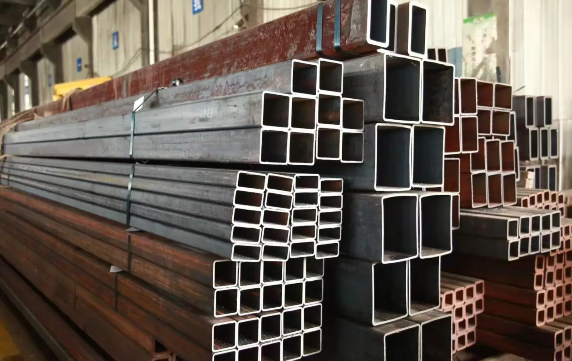
Visual Inspection: The weld seam of high-quality EN 10219 pipes should be smooth and continuous, flush with the base material after grinding, and free from obvious defects such as undercut and cracks. Processing Adaptability: Due to its typically cold-worked state, it exhibits some work hardening. For components requiring cold bending, its elongation should be verified to meet requirements to prevent cracking at bends.
Welding Preparation: Before welding, the weld area must be cleaned according to specifications. For thick-walled pipes, the corresponding welding process must be followed.
5. Surface Treatment
Common surface treatment methods for pipes according to EN 10219 include:
Black Steel Pipe: As a basic condition, suitable for uniform anti-corrosion coating in projects.
Pre-galvanized Pipe: Hot-dip galvanizing is completed at the factory, offering the best choice for corrosion protection and maintenance-free operation, but at a significantly higher price.
Spray-coated/Powder-coated Pipe: Provides optimal aesthetics and some corrosion resistance, often used for visible decoration or outdoor installations.
Note: The contract should clearly specify the treatment standards and grades, such as the "zinc layer weight" for hot-dip galvanizing (e.g., ≥275g/m²).
6. Cost Analysis
a. Under the premise of meeting standards, comprehensively compare the purchase unit price, freight, processing loss rate, and indirect costs related to supply assurance.
b. During the structural design phase, communicate with designers to utilize commonly available market specifications and lengths as much as possible, which can significantly reduce procurement costs and shorten delivery times.
c. Establish long-term partnerships with core suppliers and explore having them manage a portion of the standing inventory (VMI) to reduce your own inventory capital tied up.
7. Development Trends
To adapt to the trends of energy conservation, environmental protection, and lightweight design, the application of high-strength steel grades (such as S460) EN 10219 pipes is increasing.
Points to note during procurement:
High-strength steel has stricter welding process requirements and necessitates prior process qualification.
Its springback after forming is greater, placing higher demands on processing precision.
Read more: EN 10219-1 Technical Document for Structural Hollow Profiles (PDF) or Material Selection for Square Tubes
 sales@hu-steel.com
 English
 Español