sales@hu-steel.com
 English
 Español
1. Raw Material Quality
The chemical composition, inclusions, banded structure, camber, and edge burrs of the raw materials all affect weld quality. Inclusions in the base metal, if not effectively removed during welding, will form stress concentration points in the weld metal, reducing impact toughness and flattening performance. Severe camber and edge burrs can lead to misalignment, difficulty in arc initiation, and weld skewing. HSCO steel pipes use raw materials supplied directly by large steel mills, which undergo rigorous inspection before entering the factory, including chemical composition analysis, mechanical property testing, and surface defect detection.
3. Welding Process Stability
Impurities and burrs on the plate edges can cause momentary short circuits, unstable arc ignition, and even localized cold welding during high-frequency welding. Online inspections should be strengthened, including: the reliability of the high-frequency coil installation, the effectiveness of coolant filtration, the suitability of the opening angle, and the removal of burrs from the plate edges. Quality control should be supplemented by hydrostatic testing and ultrasonic testing.
4. Heat Treatment Process
ERW steel pipes typically undergo online medium-frequency heat treatment. The length of the air cooling section from medium-frequency heating to water cooling is easily overlooked, but it directly affects the phase transformation process and final microstructure of the weld. Excessively high cooling water temperature can lead to insufficient cooling and grain coarsening; excessively low water temperature may result in hardened microstructure. The length of the air cooling section should be matched with the production line speed to ensure a uniform and fine microstructure.
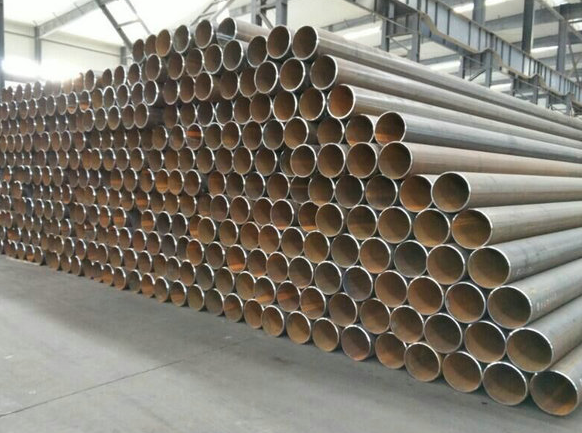
HSCO focuses on customer needs, uses ERW high-frequency welding technology to achieve automated production, and has passed national standards, American standards and other certifications. In the production of welded pipes, all factors that may affect the quality of steel pipe welds are comprehensively prevented. Online non-destructive testing equipment such as hydraulic testing, ultrasonic testing, and X-ray testing protect our quality.
Go here to learn more: welded steel pipe vs seamless steel pipe
Related information
Copyright @2017 Hunan Standard Steel Co.,Ltd and Husteel Industry Group All Rights Reserved