sales@hu-steel.com
 English
 Español
What are Low Carbon Steel Seamless Tubing?
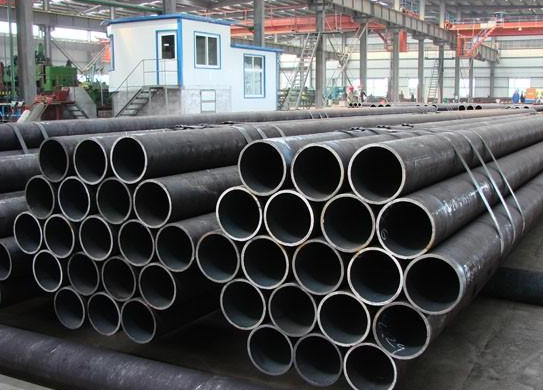
Low carbon steel seamless tubing refer to steel pipes made from high-quality carbon structural steel with a carbon content of ≤0.25%, manufactured through processes such as piercing, hot rolling, or cold drawing, resulting in pipes without any weld seams. They strictly adhere to standards such as ASTM A53/A106 and GB/T 8163 (Seamless steel pipes for fluid transport) and are one of the most widely used and extensively applied basic pipe materials in the industrial field. Due to its excellent processing performance, it is often referred to as "mild steel" in the industry.
Low Carbon Steel Seamless Tubing Features:
The performance of low carbon steel seamless pipes is determined by both their low carbon content and seamless structure, specifically as follows:
1. Low carbon steel tubing with seamless has moderate strength and high cost-effectiveness. Taking 20# steel (A53/A106 GR.B) as an example, its yield strength ≥245MPa and tensile strength 415-550MPa are sufficient to meet the requirements of medium and low pressure fluid transportation below 10MPa and general structural load-bearing, while its cost is far lower than that of alloy steel and stainless steel.
2. Low carbon steel tubing with seamless has excellent plasticity and toughness. Its microstructure is mainly ferrite, giving the material extremely high elongation (δ≥25%), making it easy to perform cold bending, flaring, stamping, and other forming processes, and effectively absorbing vibration and impact loads.
3. Low carbon steel tubing with seamless has a weld-free structure, ensuring reliable forming. As a seamless steel pipe, its integrally formed structure eliminates the risk of weld cracking common in welded steel pipes when subjected to severe cold deformation, making it particularly suitable for manufacturing complex-shaped fittings such as U-bends and coils.
4. Low carbon steel tubing with seamless has excellent weldability. The low carbon equivalent (Ceq) of low-carbon steel makes it less prone to hardening in the weld heat-affected zone. This means that in most cases, preheating is unnecessary for direct welding, and post-weld cracking is less likely, greatly facilitating on-site installation and prefabrication.
5. Low carbon steel tubing with seamless is available in a full range of specifications and are easy to process. Both hot-rolled and cold-drawn products are available, covering a wide range of sizes. Mature supporting processes are available for cutting, threading, and surface galvanizing and plastic coating.
Manufacturing Process:
Hot-rolled low-carbon steel seamless tubes: High production efficiency, low cost, suitable for general structures and mass production applications.
Cold-drawn low-carbon steel seamless tubes: High dimensional accuracy, smooth surface, suitable for hydraulic cylinders and precision mechanical parts.
Common Specifications and Dimensions:
Outer diameter from Φ21.3mm to Φ914.4mm, wall thickness from 2.11mm to 60mm, common lengths are 6m or 12m.
Delivery Condition: Usually delivered in hot-rolled, cold-drawn, or normalized condition.
Applications:
Low-carbon steel seamless pipes, due to their moderate strength, excellent plasticity and weldability, and significant economic advantages, are widely used in the following fields under medium and low pressure, non-harsh operating conditions:
1. Fluid Transportation
Widely used in municipal and industrial pipelines for water, low-pressure steam, compressed air, and gas, as well as in medium and low pressure process and utility pipeline networks within petrochemical plants.
2. Machinery Manufacturing
Used as structural components and hydraulic elements in the manufacture of automotive drive shafts, agricultural machinery structural components, medium and low pressure hydraulic cylinders, precision bearing sleeves, conveyor rollers, etc.
3. Boilers and Pressure Components
Used in low and medium pressure boilers with rated pressure ≤3.9MPa and temperature ≤450℃, mainly as economizer tubes, water-cooled wall tubes, and corresponding header pipes. Commonly used grades are 10#, 20# (A53/A106 GR.B), and boiler-specific 20G.
4. Petrochemical Auxiliary Facilities
Due to its applicability and economy in non-corrosive media, it is widely used in circulating water systems, fire protection networks, and low-pressure heat tracing pipelines in refining and chemical plants.
5. Critical Building Structures
In high-rise buildings, large stadiums, and heavy-duty factories, it is used to construct critical load-bearing columns, truss nodes, and space frames with high safety redundancy requirements. Its seamless structure provides better seismic and fatigue resistance.
6. Light Industry and Civil Use
Widely used in everyday facilities such as furniture supports, sports equipment, streetlight poles, and billboard pillars. Its surface is easily treated with galvanizing, powder coating, and other decorative and protective treatments.
Low carbon steel tubing with seamless has a large tendency to aging, both quenching and aging tendencies, as well as deformation and aging tendencies. When the steel is cooled from high temperature, the carbon and nitrogen in the ferrite are supersaturated, and the carbon and nitrogen in the iron can be slowly formed at normal temperature, so that the strength and hardness of the steel are improved, and the ductility and toughness are lowered. This phenomenon is called quenching aging.
Low carbon steel tubing with seamless will have an aging effect even if it is not quenched. The deformation of low carbon steel tubing with seamless produces a large number of dislocations. The carbon and nitrogen atoms in the ferrite interact elastically with dislocations, and carbon and nitrogen atoms gather around the dislocation lines. This combination of carbon and nitrogen atoms and dislocation lines is called the Cochrane gas mass (Kelly gas mass). It increases the strength and hardness of steel and reduces the ductility and toughness. This phenomenon is called deformation aging. Deformation aging is more harmful to the ductility and toughness of low carbon steel than quenching aging.
There are obvious upper and lower yield points on the tensile curve of low carbon steel. From the upper yield point until the end of the yield extension, a surface wrinkle band formed on the surface of the sample due to uneven deformation is called the Rydes belt. Many stamping parts are often scrapped. There are two ways to prevent it. A high pre-deformation method, the pre-deformed steel is placed for a period of time and the Rudes belt is also produced when stamping, so the pre-deformed steel should not be placed too long before stamping. The other is to add aluminum or titanium to the steel to form a stable compound with nitrogen to prevent deformation aging caused by the formation of Kodak air mass.
Conclusion:
Low carbon steel seamless tubes, with their moderate strength, excellent plasticity, seamless overall reliability, and superior weldability, have become an irreplaceable fundamental material in fields such as water supply and drainage, fire protection, low-pressure steam, general mechanical structures, and hydraulic systems.
Read more: Carbon Steel vs. Black Steel or Seamless vs. Welded Pipe
Related information
Copyright @2017 Hunan Standard Steel Co.,Ltd and Husteel Industry Group All Rights Reserved