Used drill pipe refers to steel pipes that have been used in well operations and, after recycling, inspection, repair, or modification, can be reused in drilling projects. It represents a resource recycling solution, with strong and growing market demand, primarily driven by cost reduction and efficiency improvement, and the revitalization of existing resources.
What is Used Drill Pipe?
Drill pipe itself is a threaded steel pipe that connects the drilling rig on the surface to the drill bit underground, enduring enormous internal and external pressures, torsion, and vibrations during drilling.
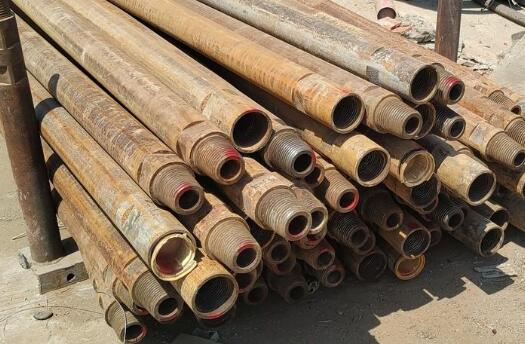
Simply put, used drill pipe is drill pipe that has been "retired and put back into service." It's not just an old steel pipe; its core lies in the assessment of its residual value. Evaluating a used drill pipe mainly involves the following key points:
1. Wear and Wall Thickness: This is a core indicator. The remaining thickness of the drill pipe wall directly determines the amount of pressure and torque it can withstand.
2. Thread Integrity: The thread is crucial for the
drill pipe connection. If the thread is severely worn, it will cause a loose connection and may even lead to downhole accidents.
3. Straightness: Bent drill pipes cannot be used normally.
4. Flaw Detection Report: Non-destructive testing is required to confirm the absence of internal cracks or other hidden defects.
5. Historical Records: Cumulative usage time, geological formations previously worked on (soft rock/hard rock), maintenance records, etc.
Many professional companies conduct rigorous screening, repair, and testing of recycled used drill pipes. For example, Zhongyuan Petroleum Engineering Company has repurposed over 3,800 idle drill pipes, saving over 13 million yuan in investment in this alone.
What is the Market Demand for Used Drill Pipes?
The market demand is strong and is in a stable growth phase.
Currently, the used drill pipe market is not a scattered sale of used goods, but a highly specialized segment. The main drivers of demand are as follows:
1. Cost Advantage
This is the most fundamental reason. The cost of purchasing used drill pipes is typically only 30%-60% of that of new products. This is extremely attractive to private enterprises or small and medium-sized drilling teams with cost-sensitive projects. Buying usable tools for less money is the key to success.
2. Market Size and Growth
Industry analysis data shows that the transaction volume of used drilling equipment already accounts for approximately 15%-20% of the new machine market, with a stable annual growth rate of around 8%. This indicates that the entire industry is moving towards standardization and large-scale operation.
3. Wide Range of Applications, Not Limited to Oil
While oil and gas drilling is a high-end market, the applications of used drill pipes extend far beyond this:
● Mineral Exploration: General surveys and detailed investigations of metal and coal mines.
● Hydrological Wells: Well drilling and geothermal well development.
● Engineering Survey: Infrastructure construction such as building pile foundations, railways, highways, and tunnels.
● Geological Disaster Prevention: Slope anchoring and landslide control.
4. Industry Trends: From "Buying Used" to "Circulation"
Under the national advocacy of green recycling and "dual-carbon" goals, the circulation and remanufacturing of used equipment has received policy support. Some professional companies, such as Zhongdi Equipment Mining Materials Chongqing Co., Ltd., with over 20 years of experience, not only sell but also provide one-stop services for equipment evaluation, recycling, and refurbishment.
5. Active International Trade
Globally, the trade in used drill pipes and their new counterparts is very active. According to 2024 data, China is the world's largest exporter of drill pipes, while the United States, the UAE, and Saudi Arabia are the main importers. The United States, as the demand side, often sees its monthly imports fluctuate in the millions of dollars, indicating a sustained global demand.
What should you pay special attention to when purchasing used drill pipes?
Technical evaluation is better than price: Always request or conduct on-site flaw detection reports, checking the threads and wall thickness; don't just look at the appearance.
Trace the source: Try to understand the equipment's historical operating conditions, whether it was used for drilling soft soil or hard rock, and the workload.
Clear after-sales service: Reputable suppliers will provide certain warranties or technical support.
Choose reputable manufacturers: Prioritize manufacturers with original factory backgrounds, professional evaluation teams, and physical inventory, rather than simply intermediaries.
Frequently Asked Questions (FAQ):
1. How are used drill pipes evaluated and graded?
Based on testing results, drill string components are typically classified into three grades: Grade 1, Grade 2, and Grade 3. Different grades correspond to different remaining lifespans and applicable working conditions. Professional suppliers should be able to provide testing reports and grade certificates for each drill pipe. Drill pipes that have been recycled and cleaned should be re-tested and graded before re-entering the market.
2. What are the risks of inferior drill pipes?
Purchasing inferior or untested used drill pipes may expose you to the following three major risks:
a. Insufficient drill pipe strength, making them prone to sudden breakage under high torque and high pressure conditions, potentially leading to serious accidents such as drill string detachment, stuck drill bit, and downhole collapse.
b. Frequent replacement of damaged drill pipes reduces construction efficiency. For example, in one municipal project, the cost per hole was 30% higher than normal due to the use of low-quality drill bits.
c. Unbalanced drill pipes generate vibration during high-speed rotation, accelerating the damage to bearings and transmission components. Insufficient wall thickness may cause bursting during deep drilling.
3. How to choose a reliable supplier?
Companies with high industry recognition possess professional testing equipment and evaluation teams, and can provide testing reports.
Warning signs:
failure to provide testing reports or material certificates;
prices significantly lower than the market average;
unwillingness to accept third-party testing;
lack of a fixed business location or too short a establishment period.
In summary, used drill pipes are an important way for the drilling industry to reduce costs and increase efficiency. With proper professional evaluation, their cost-effectiveness is very high, and market demand continues to improve.
Read more: API 5DP Drill Pipe Specification or Casing Pipe vs. Drill Pipe Differences
 sales@hu-steel.com
 English
 Español