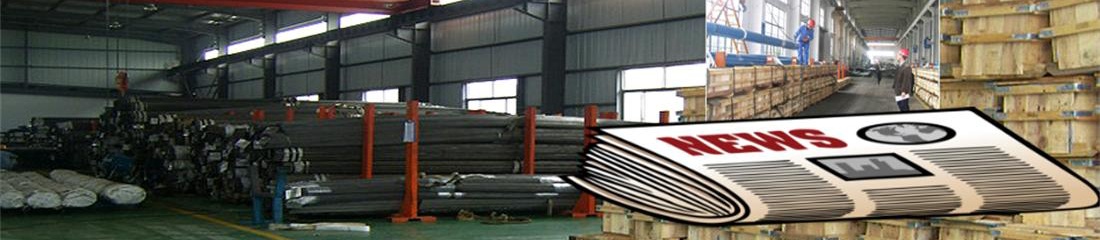
The key to transporting and storing galvanized pipes (GI Pipe) is to fully protect the surface zinc layer, preventing scratches or damage caused by external impacts or friction, and also preventing rust caused by humid or corrosive environments. Furthermore, care must be taken to prevent bending, flattening, or other deformations during stacking or handling to ensure the product quality and corrosion resistance of the pipes remain unaffected. Specific precautions are as follows:
Transportation Precautions:
1. During transportation, galvanized pipes must be stacked neatly and securely fixed with ropes and baffles to avoid collisions and friction that could scratch the zinc layer.
2. Avoid mixing galvanized pipes with sharp or corrosive materials to prevent scratches from sharp objects and damage from corrosive materials.
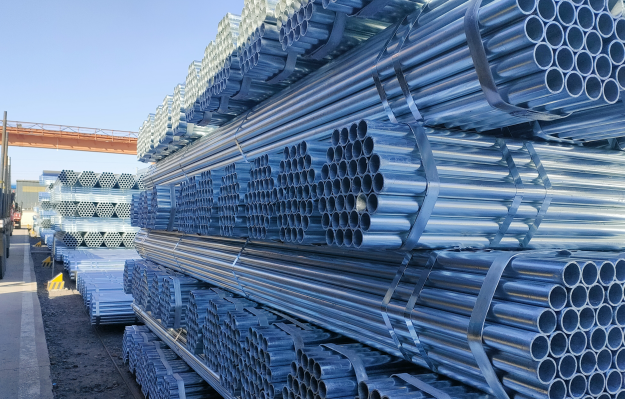
3. When transporting outdoors, cover the pipes with rainproof cloth to prevent rainwater and dew from soaking the pipes and causing rust.
4. Transport vehicles should drive smoothly to minimize bumps and prevent pipe deformation and damage to joints.
5. During loading and unloading, handle with care; throwing is strictly prohibited. To prevent pipe ends from impacting the ground or other hard objects, which could deform the pipe opening or cause the zinc coating to peel off; when using a crane to load and unload bundled steel pipes, rubber pads, waste tire linings, or burlap should be placed at the contact points between the slings and the steel pipes to prevent the steel wire ropes from damaging the zinc coating;
6. For long-distance or bumpy road transport, it is recommended to place straw mats, rubber mats, or wooden strips between each layer of galvanized pipes to reduce friction between the pipes and prevent scratches or friction spots;
7. For threaded pipes (pipes with threads machined at both ends), plastic or metal pipe clamps should be screwed on before transport, or plastic protective caps should be applied to protect the threads and prevent foreign objects from entering the pipe.
Storage Precautions:
1. The storage site should be dry, well-ventilated, and flat, avoiding dampness and water accumulation, and away from corrosive environments (such as chemical plants and beaches);
2. Galvanized pipes should be stacked separately according to specifications and length. The stacking height should not be too high (not exceeding 3 meters). For small diameter (such as DN20 and below) or thin-walled pipes, the stacking height is recommended to be controlled within 1.5 meters to prevent deformation of the bottom pipes under pressure;
3. When storing, wooden blocks should be laid at the bottom of the pipes to isolate them from the ground and prevent ground moisture corrosion;
4. Regularly inspect the stored galvanized pipes. If scratches or surface rust are found on the zinc layer, apply zinc layer repair agent in time to prevent the spread of rust;
5. When stacking, it is recommended to use a "well" shaped cross stacking, with layers placed vertically alternately to improve stability and prevent the upper layer of pipes from all pressing on the same stress line;
6. Galvanized pipes should be stored indoors. If outdoor storage is unavoidable, they must be completely covered with waterproof tarpaulins, leaving gaps between the tarpaulin and the pipes for ventilation. Drainage ditches should be dug around the perimeter to prevent water accumulation.
7. During long-term storage, dust accumulation on the pipe surface will absorb moisture from the air. It is recommended to clean the surface dust every 3 to 6 months with a broom or compressed air to prevent localized electrochemical corrosion.
8. Warehouse management should prioritize stacking pipes according to their arrival date, following the "first-in, first-out" principle. Batches with longer storage times should be prioritized for shipment to prevent some pipes from exceeding their optimal service life due to prolonged stockpiling.
9. If storage in highly corrosive environments (such as near chemical plants or in open-air environments near the sea) for more than 3 months, it is recommended to pre-coat the galvanized pipe surface with a layer of transparent varnish or anti-rust wax to form an additional protective film. This can be easily removed with a solvent before use.
Conclusion:
The core of galvanized pipe storage and transportation is protecting the zinc coating and preventing deformation. During transportation, the items must be securely fixed, protected from bumps and collisions, covered to prevent rain, and attention should be paid to buffering during loading and unloading and protecting the threads. When storing, choose a dry and ventilated place, classify and stack them, raise them to prevent moisture, and check them regularly and follow the "first-in, first-out" principle.
Read more: GI Pipe Specifications and Uses or Galvanized ERW pipe
 sales@hu-steel.com
 English
 Español