ASTM A500 Structural Tubing: Standards, Performance, and Applications
If you work in the construction, bridge, or heavy machinery manufacturing industries, you've likely encountered the ASTM A500 specification in your bill of materials. As the most commonly used standard for cold-formed structural tubing in North America and globally, ASTM A500 covers a wide range of applications, from skyscraper columns to stadium trusses.
This guide delves into the details of the ASTM A500 structural tubing specification, explaining its differences from other standards such as A501 or A1085, and detailing the chemical composition and mechanical properties for Grade B and Grade C.
What is ASTM A500?
ASTM A500 is a standard specification published by the American Society for Testing and Materials (ASTM), officially titled "Standard Specification for Cold-Formed Welded and
Seamless Carbon Steel Structural Tubing." This standard primarily addresses round, square, rectangular, or specially shaped carbon steel tubing. It requires the tubing to meet specific chemical composition (carbon, manganese, phosphorus, sulfur, copper) and mechanical property requirements.
Cold Bending vs. Hot Forming:
A key characteristic of ASTM A500 is its cold bending process. This means the tubing is gradually formed at room temperature using a series of rollers, and then the joint is fused together using high-frequency resistance welding (ERW). This distinguishes it from
ASTM A501 (hot-formed tubing), and cold bending typically produces higher yield strength and tighter tolerances.
ASTM A500 Structural Tubing Grade Classification:
ASTM A500 structural tubing primarily includes four grades: Grade A, Grade B, Grade C, and Grade D.
A500 Grade B and Grade C are the most common on the market.
In most engineering projects, because Grade C offers higher strength with minimal cost increase, industry professionals generally recommend using Grade C as the default specification.
Common Sizes for ASTM A500 Structural Tubing:
The best-selling sizes on the market are typically concentrated in small to medium sizes, such as:
●
Round Tubing: OD (outer diameter) ranges from 0.75 inches (
SCH 40/80) to 12 inches.
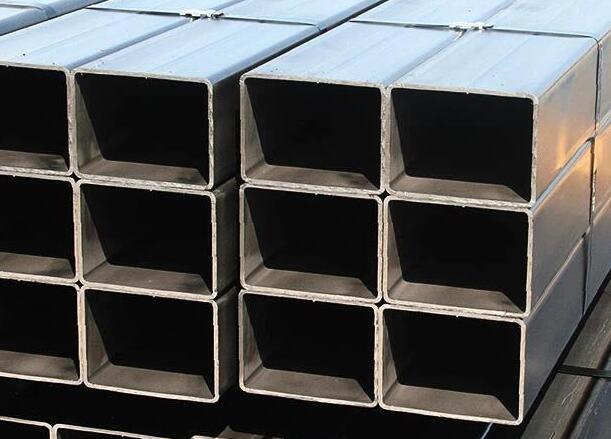
● Square Tube/Rectangular Tube: Common sizes include 2×2, 4×4, 6×4, etc., with wall thicknesses typically ranging from 1/8 inch (0.125) to 1/2 inch (0.5).
ASTM A500 Chemical Composition Requirements:
ASTM A500 imposes strict limits on harmful elements while allowing the addition of copper (Cu) to improve corrosion resistance. The following are the maximum permissible contents for each grade (based on thermal analysis):
Element
|
Grade A (%)
|
Grade B (%)
|
Grade C (%)
|
Grade D (%)
|
Carbon (C), max
|
0.26
|
0.26
|
0.23
|
0.23
|
Manganese (Mn), max
|
1.35
|
1.35
|
1.35
|
1.40
|
Phosphorus (P), max
|
0.035
|
0.035
|
0.035
|
0.035
|
Sulfur (S), max
|
0.035
|
0.035
|
0.035
|
0.035
|
Copper (Cu), min
|
0.20 (if required)
|
0.20 (if required)
|
0.20 (if required)
|
0.20 (if required)
|
Mechanical Properties of ASTM A500:
Mechanical properties are key to material selection. Note that the yield strength requirements for square and rectangular tubes differ slightly from those for round tubes.
Performance Specifications
|
Grade A
|
Grade B
|
Grade C
|
Grade D
|
Tensile Strength (min)
|
45,000 psi (310 MPa)
|
58,000 psi (400 MPa)
|
62,000 psi (425 MPa)
|
58,000 psi (400 MPa)
|
Yield Strength - Round (min)
|
33,000 psi (230 MPa)
|
42,000 psi (290 MPa)
|
46,000 psi (315 MPa)
|
36,000 psi (250 MPa)
|
Yield Strength - Square/Rectangular (min)
|
39,000 psi (270 MPa)
|
46,000 psi (315 MPa)
|
50,000 psi (345 MPa)
|
50,000 psi (345 MPa)
|
Elongation (within 2 inches). (50.8 mm), min, %A
|
25%
|
23%
|
21%
|
23%
|
Processing and Manufacturing:
1. Welding Process
According to ASTM A500 standard, welded pipes must be manufactured using
electric resistance welding (ERW). This process utilizes the resistance of the metal to generate heat, while simultaneously applying mechanical pressure to forge the edges together, forming a strong longitudinal butt weld.
2. Seamless Tubing
Although A500 covers seamless tubing, in the actual construction market, cold-drawn seamless tubing is generally more expensive and has lower inventory. Most structural hollow steel sections are produced using the ERW process.
Applications:
ASTM A500 structural tubing is widely used in load-bearing and non-load-bearing structures:
● Building Structures: Columns, supporting beams, trusses, and canopy frames for high-rise buildings.
● Infrastructure: Highway bridges, pedestrian bridges, docks, and towers.
● Industrial and Manufacturing: Crane booms, heavy equipment frames, and conveyor structures.
● General Use: Fences, railings, decorative structures, and billboard supports.
Comparison of ASTM A500 with Other Standards:
●
ASTM A500 vs. A513:
A500 is a structural grade steel with defined yield strengths (e.g., 46 ksi or 50 ksi), suitable for load-bearing applications. A513 is typically a mechanical grade pipe, suitable for non-critical components in automobiles or furniture; its material is softer (e.g., 1008/1020 steel) and not suitable for primary structural supports.
● ASTM A500 vs. A1085:
A1085 is a newer standard with superior performance compared to A500. It requires stricter chemical composition and better impact toughness (Charpy V-Notch), suitable for special buildings with extremely high seismic resistance requirements. A500 remains the most cost-effective general-purpose structural pipe.
● ASTM A500 vs. CSA G40.21:
In Canada, CSA G40.21 50W is often considered a substitute for A500 Grade C. Both have a yield strength of 50 ksi, but there are slight differences in chemical composition and tolerances (e.g., wall thickness tolerance is ±10% for A500, while CSA is typically +10%/-5%).
Latest Revisions to the ASTM A500 Standard:
According to the latest Steel Tube Institute guidelines, the ASTM A500 standard underwent significant revisions in 2021, and these updates are solidified in the 2023 edition:
1. Increased Strength: The new standard clarifies and unifies the strength requirements for Grade C. Now, round and rectangular tubing have a uniform minimum yield strength of 50 ksi (approximately 345 MPa) at Grade C.
2. Maximum Size: The standard specifies a maximum perimeter of 88 inches (approximately 2235 mm). This means that the maximum size for square tubing is 22 inches x 22 inches, for rectangular tubing it is 34 inches, and for round tubing it is 28 inches in diameter.
3. Thickness limit: The maximum nominal wall thickness is 1 inch (25.4 mm).
The above information applies to structural pipes of Grade B, Grade C, and Grade D in ASTM A500/A500M-23 specifications.
Read more: S235JRH and S355J2H Structural Steel
 sales@hu-steel.com
 English
 Español