sales@hu-steel.com
 English
 Español
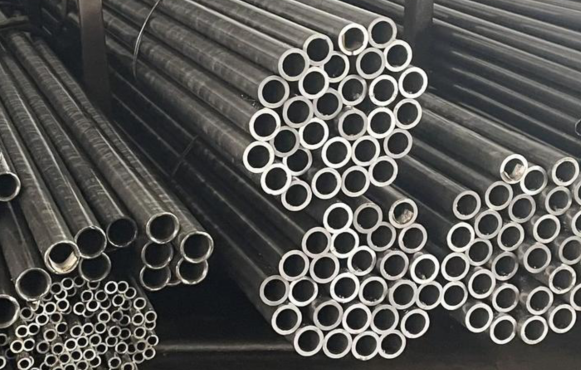
In modern industry, seamless steel pipes (SMLS), as important structural materials, are widely used in construction, oil and gas transportation, machinery manufacturing, power generation, shipbuilding, and many other fields. Among numerous performance indicators, mechanical properties are one of the key factors determining the quality and service life of seamless steel pipes. How to accurately and effectively test the mechanical properties of steel pipes not only relates to whether the product meets standards but also affects the safety and economic benefits of projects.
Mechanical Property Definition:
The mechanical properties (or mechanical strength properties) of seamless steel pipes refer to a series of physical characteristics and resistance to damage exhibited by the pipe material under external forces. These properties are very important performance indicators in the manufacturing and use of seamless steel pipes, determining their application range and service life.
The phenomenon of metallic materials fracturing under alternating stress is called fatigue. The maximum stress at which a metal can withstand repeated alternating stress without breaking is called the material's fatigue limit.
7. Stiffness
The ability of a part to resist elastic deformation under stress. Stiffness can be calculated using the material's elastic modulus and geometric dimensions; the higher the elastic modulus, the greater the stiffness.
Common Mechanical Property Testing Methods for Seamless Steel Pipes:
1. Tensile Test
Measures parameters such as tensile strength, yield strength, elongation, and reduction of area after fracture of the steel pipe.
Test Method: The sample steel pipe is processed into a standard specimen and placed in a universal testing machine under tension until it breaks. The stress-elongation curve is recorded to obtain the required data.
Advantages: Comprehensive testing, authoritative data, and the most basic means of evaluating steel performance.
2. Impact Test
Test Method: Using a pendulum impact testing machine (such as a Charpy impact tester), the specimen is broken at a specified temperature, and the absorbed energy is measured.
Low Temperature Testing: Some projects require impact toughness at -20℃, -40℃, or even lower temperatures to ensure non-brittle fracture during use in extremely cold regions.
Applicable Industries: Widely used in oil and gas, pressure vessels, cryogenic equipment, and other industries.
3. Hardness Test
Determines the compressive strength and wear resistance of steel pipes by the depth or area of the indentation.
Common Methods:
- Brinell Hardness (HB): Suitable for medium to soft materials.
- Rockwell Hardness (HRB/HRC): Commonly used for steel.
- Vickers Hardness (HV): Suitable for thin-walled or small samples.
Advantages: Quick operation, suitable for large-scale rapid screening.
4. Bending Test
Tests the plasticity and machinability of steel pipes, especially for evaluating weld quality.
Test Method: Apply a certain bending angle and radius to the sample and check for cracks or fractures.
5. Fatigue Test
Tests the load-bearing capacity of steel pipes under repeated loads to predict service life.
Test Method: A specialized fatigue testing machine is used to simulate cyclic stress and record the fracture cycle.
Applicable Industries: Aerospace, energy equipment, pressure pipelines, and other fields with high safety requirements.
6. Flattening Test
Tests the ability to undergo plastic deformation.
Test Method: A section of steel pipe is flattened between two flat plates until it reaches the height specified in the standard. Check for cracks at the pressure points. Used to test the steel pipe's ability to withstand radial plastic deformation.
7. Flaring Test
Tests the flaring performance of the pipe end.
Test Method: The end of the steel pipe sample is enlarged using a mandrel with a certain taper. Check for cracks at the flared end. Tests the steel pipe's ability to withstand radial expansion plastic deformation.
8. Metallographic Examination
Analyzes the internal microstructure.
Test Method: A sample is cut, polished, and etched. Its microstructure (e.g., grain size, non-metallic inclusions) is observed under a microscope to evaluate the metallurgical quality of the material.
Conclusion:
Mechanical property testing of seamless steel pipes is a systematic project that requires both sophisticated instruments and standardized operating procedures. For manufacturing enterprises, conducting thorough mechanical property testing is not only a guarantee of product quality but also a core element of corporate reputation and brand.
Read more: How to Reduce the Risk of Loss During Seamless Steel Pipe Storage?
Related information
Copyright @2017 Hunan Standard Steel Co.,Ltd and Husteel Industry Group All Rights Reserved