Cold drawing (cold rolling) refers to the process of processing steel ingots or billets into various types of steel products through cold drawing, cold bending, and room temperature rolling.
Carbon steel pipes are divided into two main categories: hot-rolled pipes and cold-rolled (cold-drawn) pipes. Carbon steel pipes are made from steel ingots or solid steel billets by piercing to form a pipe blank (commonly known as a rough tube), which is then hot-rolled, cold-rolled, or cold-drawn. Carbon steel pipes play an important role in my country's steel pipeline industry.
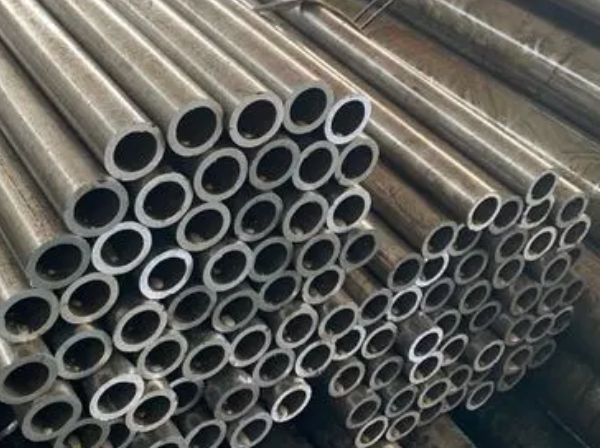
Cold-rolled carbon steel pipes are a type of
cold-drawn or cold-rolled precision seamless pipe, suitable for mechanical structures and hydraulic equipment, characterized by high dimensional accuracy and good surface finish. In addition, this process can also produce alloy steel thin-walled pipes and special-shaped steel pipes. Hot-rolled seamless steel pipes generally have an outer diameter greater than 32mm and a wall thickness of 2.5-75mm. Cold-rolled seamless steel pipes can have a diameter up to 6mm and a wall thickness down to 0.25mm. The dimensional accuracy of cold-rolled pipes is higher than that of hot-rolled pipes.
Hot-rolled steel pipes can be classified according to their uses into ordinary steel pipes, medium and low-pressure boiler steel pipes, high-pressure boiler steel pipes, alloy steel pipes, petroleum cracking steel pipes, geological steel pipes, and other steel pipes.
Ordinary carbon steel pipes:
These are made from high-quality carbon steel such as #10, #20, #30, #35, and #45; low-alloy structural steel such as 16Mn and Q345B; or alloy steel such as 40Cr, 30CrMnSi, 45Mn2, and 40MnB, through hot rolling or cold rolling. #10 and #20 low-carbon steel seamless pipes are mainly used for fluid transportation pipelines. #45 and 40Cr medium-carbon steel seamless pipes are used to manufacture mechanical parts, such as load-bearing components in automobiles and tractors. Typically, carbon steel pipes require tensile (strength) and flattening tests. Hot-rolled steel pipes are delivered in hot-rolled or heat-treated condition; cold-rolled steel pipes are delivered in heat-treated condition.
American Standard Cold-Rolled Carbon Steel Pipe:
In international trade and high-end manufacturing, the most commonly used standard for cold-rolled carbon steel pipe is ASTM A519 (Seamless carbon and alloy steel pipes for machinery).
Commonly Used Steel Grades:
Grade 1018: Low carbon steel, suitable for general mechanical parts
Grade 1020: Low carbon steel, good weldability, wide range of applications
Grade 1026: Medium carbon steel, high strength, suitable for hydraulic cylinders
Grade 1045: Medium carbon steel, high strength, used for shafts and transmission components
Mechanical Properties (using ASTM A519 Grade 1026 as an example):
Yield Strength: ≥415 MPa
Tensile Strength: ≥485 MPa
Elongation: ≥15%
Hardness: ≤89 HRB
Cold-Drawn Tube Dimensional Tolerances (ASTM A519):
Outer diameter ≤25.4mm, tolerance is ±0.05mm
Outer diameter 25.4-50.8mm, tolerance is ±0.08mm
Wall thickness tolerance is typically ±10%
In addition,
ASTM A513 is a standard for resistance-welded precision steel tubes, suitable for general structural applications; while ASTM A519... It is a seamless tube, suitable for high-pressure and precision machinery applications. It's important to distinguish between the two.
Differences between cold-rolled and hot-rolled steel:
1. Different buckling properties: Cold-rolled steel allows for local buckling of the cross-section, thus fully utilizing the load-bearing capacity of the member after buckling; while hot-rolled steel typically does not allow for local buckling.
2. Different residual stress distribution: The causes of residual stress in hot-rolled and cold-rolled steel are different, resulting in significantly different distributions on the cross-section. The residual stress distribution on the cross-section of cold-formed thin-walled steel is curved, while the residual stress distribution on the cross-section of hot-rolled or welded steel is thin-film.
3. Different torsional properties: Hot-rolled steel has higher free torsional stiffness than cold-rolled steel, therefore, hot-rolled steel has better torsional properties than cold-rolled steel.
Read more: Cold Drawn Seamless Tube for Mechanical & Hydraulic
 sales@hu-steel.com
 English
 Español