sales@hu-steel.com
 English
 Español
Bending Phenomenon: The steel pipe bends after the sizing unit, and the bending direction is unidirectional.
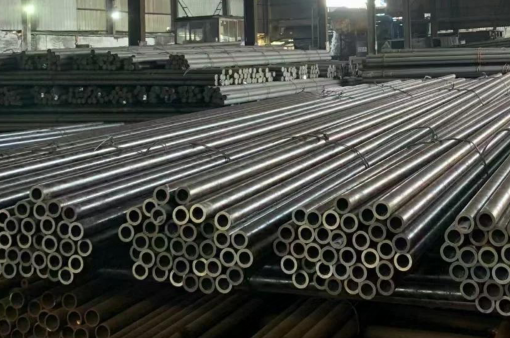
2. Uneven Wall Thickness of Raw Material
The steel pipe itself has significant wall thickness unevenness (eccentricity), which causes bending due to inconsistent shrinkage/deformation during cooling or under stress.
For seamless steel pipes (SMLS), the source is the uneven wall thickness or eccentricity of the billet. During subsequent rolling and cooling processes, the thinner side cools faster or deforms more, causing bending towards the thicker side. This is an inherent material defect.
For welded pipes (such as ERW pipe), uneven thickness of the steel coil will cause bending.
3. Uneven Temperature on the Upper and Lower Surfaces of the Steel Pipe
Uneven cooling of the steel pipe (e.g., temperature difference between top/bottom or left/right) leads to different shrinkage rates in different parts of the pipe, causing thermal stress bending.
Bending Phenomenon: The steel pipe is straight after cutting during production, but bends during cooling on the finishing rack, and the overall bending direction is consistent.4. Sizing and Residual Stress
Bending after hydrostatic testing is more commonly caused by large residual stress inside the steel pipe (from rolling, cooling, and straightening). During hydrostatic testing, the internal pressure causes slight plastic deformation of the steel pipe, releasing or redistributing residual stress, thus exposing potential bending.
Bending Phenomenon: The steel pipe is straight before hydrostatic testing, but bends after the test, and the bending direction is fixed.
Technical Factors Affecting the Straightness Measurement of Steel Pipes:
Read more: Main quality testing items and methods of seamless pipes
Related information
Copyright @2017 Hunan Standard Steel Co.,Ltd and Husteel Industry Group All Rights Reserved