sales@hu-steel.com
 English
 Español
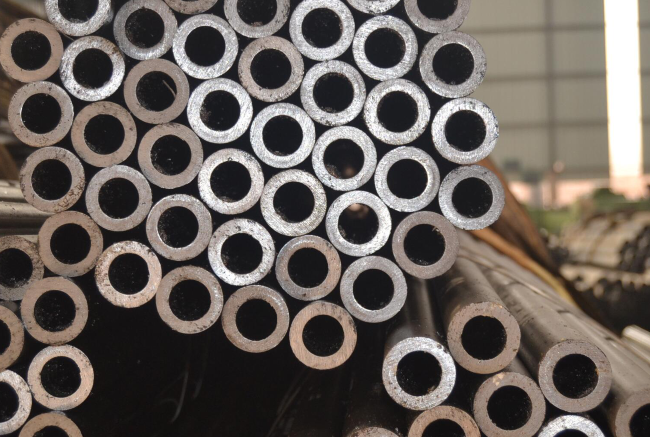
Choosing the right carbon steel seamless pipe for your project is more than just matching sizes and grades. The right choice ensures safety, service life, and cost-effectiveness; the wrong choice can lead to operational failures and budget overruns. This guide covers the key decisions you need to make before placing an order—from determining your operating conditions to evaluating suppliers.
Step 1: Determine Your Operating Conditions
Before selecting pipes, clearly define your operating environment:
● Operating Pressure and Temperature — Determine the maximum and minimum values. Higher temperatures reduce the allowable stress of the steel, directly affecting the required wall thickness.
● Fluid Type — Is it corrosive, abrasive, or a high-purity fluid? Carbon steel is not suitable for highly corrosive media unless there is a protective lining or coating.
● Mechanical Loads — Consider external loads such as weight, vibration, and thermal expansion.
These factors determine the required standard, grade, and wall thickness.
Step 2: Select the Appropriate Standard and Grade
Choose the standard that matches your service conditions. The three most common ASTM standards for carbon steel seamless pipes are:
| Standard | Typical Service | Common Grade |
|---|---|---|
| ASTM A53 | General plumbing, steam, water, air (low to medium temperature) | A53 Grade B |
| ASTM A106 | High-temperature, high-pressure service (up to 800°F / 427°C) | A106 Grade B |
| API 5L | Oil and gas transmission pipelines | X42, X52, X65, X70 |
Choosing the correct standard and grade is crucial. For high-temperature or high-pressure systems, ASTM A106 is the standard choice. For pipe delivery, API 5L is mandatory.
Step 3: Determine the Correct Size and Wall Thickness
Pipe size is determined by two parameters:
● Nominal Pipe Size (NPS) – Approximate outer diameter
● Schedule – The wall thickness; higher schedule numbers (e.g., SCH 80 vs. SCH 40) indicate thicker walls and higher pressure ratings
Key Principle: Wall thickness is not a measure of quality, but a design parameter. Thicker is not always better—increasing wall thickness adds unnecessary weight and cost if the design pressure is not required. Always calculate or verify the required wall thickness grade based on the operating pressure and temperature using applicable design specifications (e.g., ASME B31.3).
Step 4: Evaluate Suppliers and Obtain Documentation
After determining the technical requirements, the next step is to select a supplier. To minimize procurement risks:
● Check supplier qualifications—look for reputable manufacturers or authorized distributors with extensive experience.
● Request and review the Mill Test Certificate (MTC) – Verify that the chemical composition and mechanical properties stated in the certificate match your required standard and grade.
● Ensure traceability—ensure that each pipe is marked with the grade, specification, furnace number, and manufacturer's mark corresponding to the MTC.
Tip: For critical applications, explicitly request third-party inspection reports or witnessed testing from suppliers in the purchase order.
Step 5: Consider Cost vs. Long-Term Value
Price is important, but the lowest quote is often not the best choice. Pipes with substandard composition, poor dimensional accuracy, or insufficient testing may fail prematurely, leading to downtime, repairs, or safety incidents. Always consider the total cost of ownership, not just the purchase price.
Read more:
● How to Inspect and Verify Quality of Carbon Steel Seamless Pipes?
● CS Seamless Steel Pipe Sizes and Weights
Related information
Copyright @2017 Hunan Standard Steel Co.,Ltd and Husteel Industry Group All Rights Reserved